
Ray is a lighting concept designed for the International Space Station to bring natural light in a confined environment.

The project has been developed in a team of 6 people during the course Space4Inspiraction, held at Politecnico di Milano by Professors A. Dominoni and B. Quaquaro together with ESA (European Space Agency). Partner of the project was Foscarini, excellence in the field of lighting. The concept starts from the idea of bringing natural light onboard, exploiting it as a tool to increase the astronauts’ wellbeing.
Ray has been designed to give three main benefits to the crew:
1. Reducing the sense of confinement in the close environment where they live;
2. Restoring their circadian rhythms;
3. Providing them with natural stimuli from Earth.
To do so, shadows are created on the inner surfaces of the spacecraft, animating the environment in a discreet way. Light transforms the modules from aseptic spaces into cozy rooms, which feel like home. In particular, light projections are used to depict the reflections given by hypothetical windows, giving the illusion of being in a room with openings.
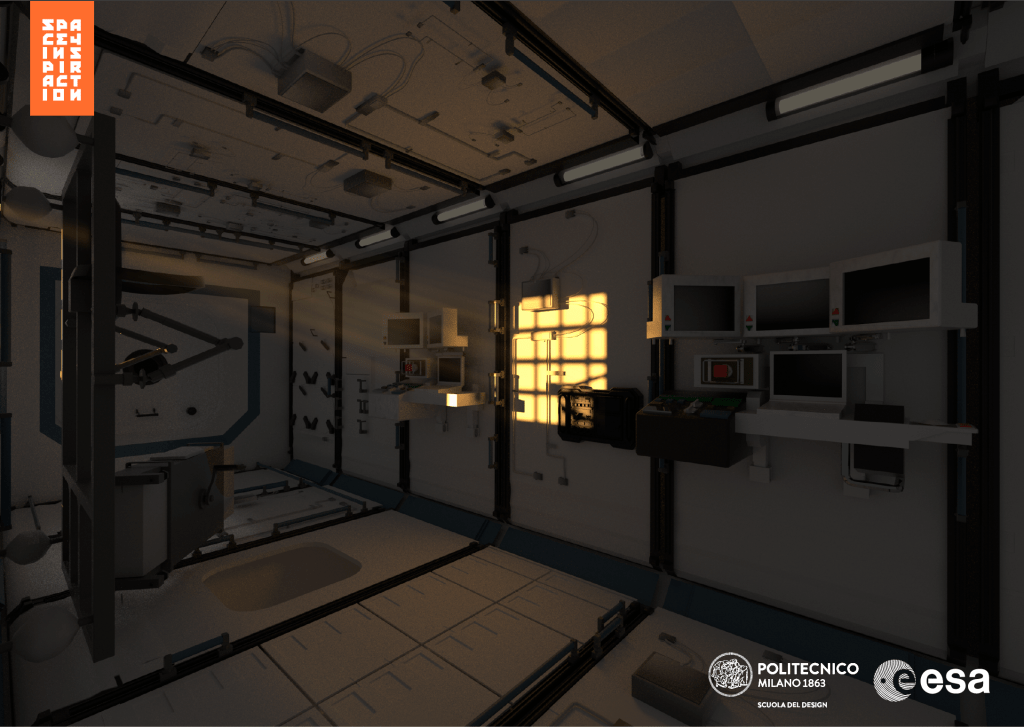
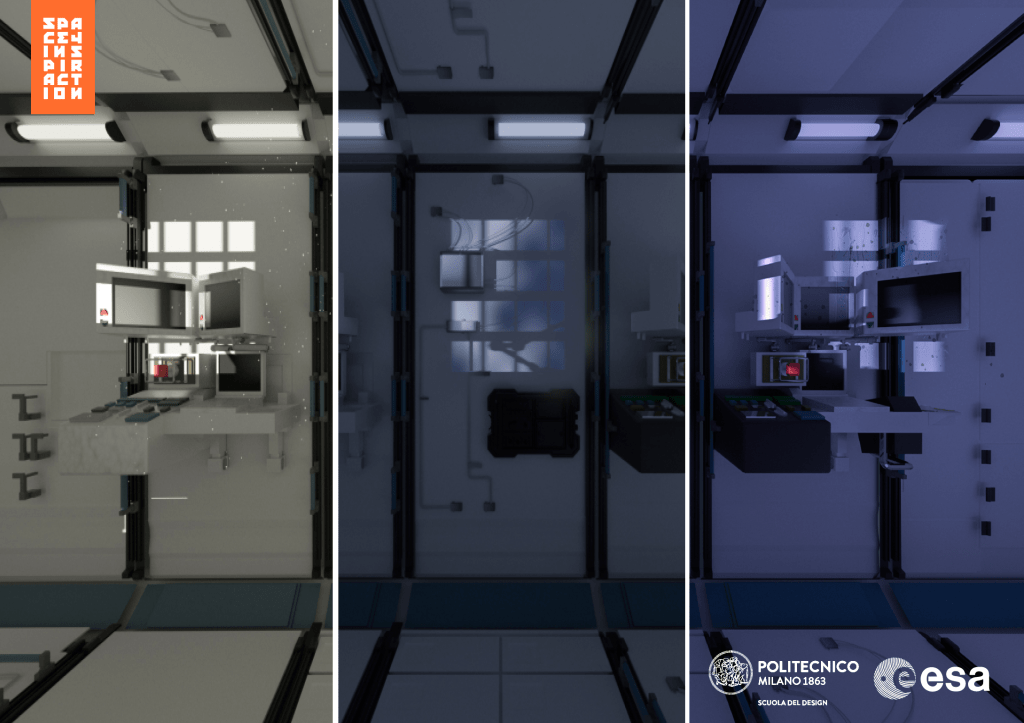
The lighting system is thought to be easily integrated in the current lighting system present onboard and it is customisable. The OLEDs mimic the temperature and the intensity of natural light in two different modes, which can be set using a small switch. The first one is “automatic mode”, which means that they will automatically adjust throughout the day recreating the atmosphere of the different moments of a typical day on Earth.

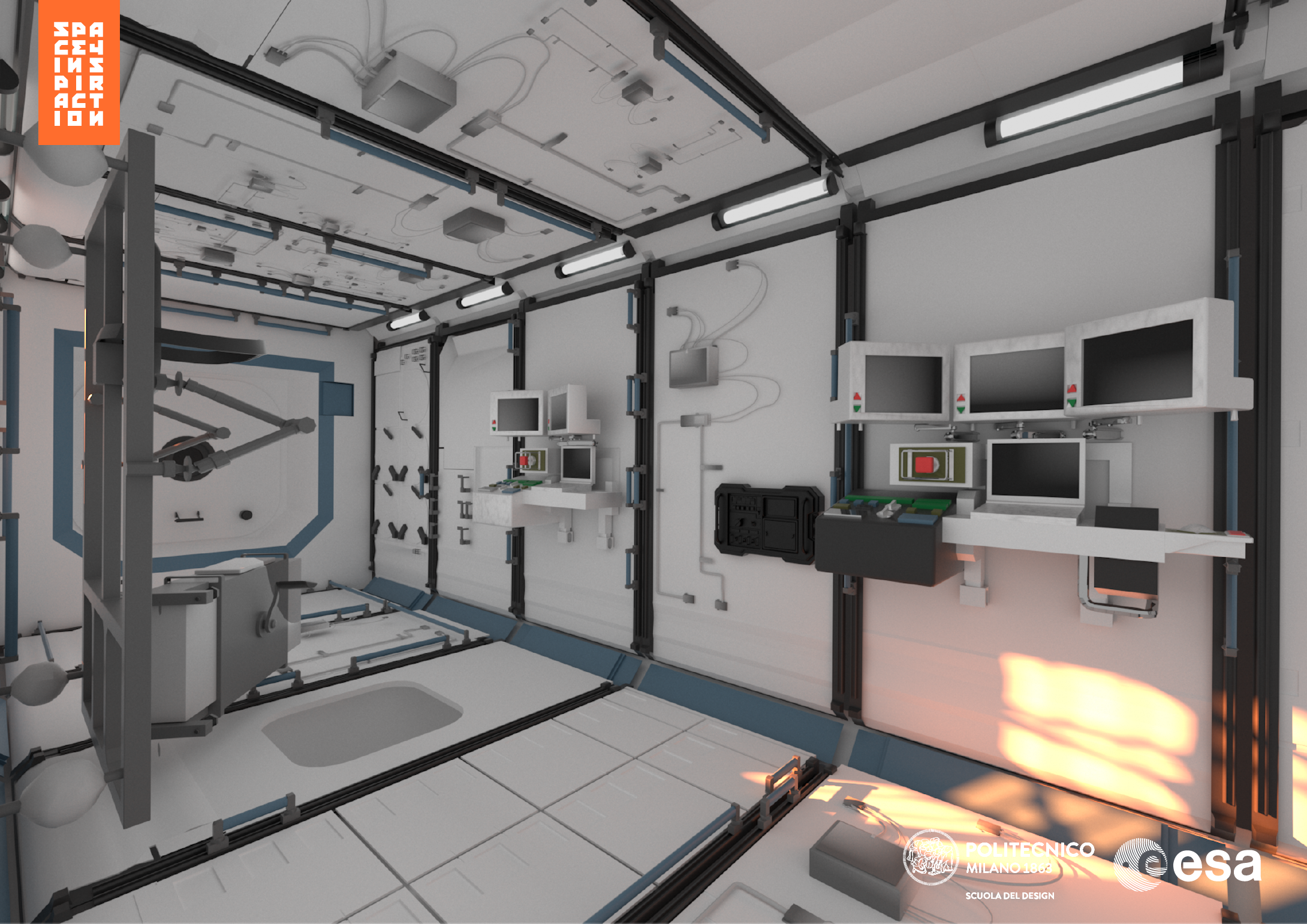
The second one is “weather mode”, which recreates a sunny, cloudy and rainy day atmosphere depending on your choice.
 SERENA CROTTI PORTFOLIO